Shew Stones
2018-present
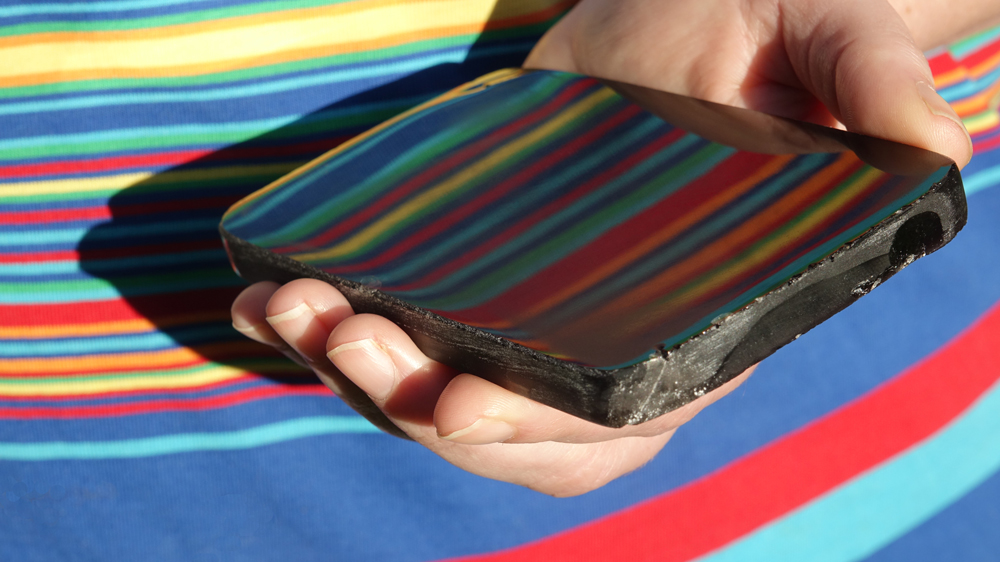
This photo documents one of a series of polished obsidian tablets made in Burns, Oregon, near Glass Butte—one of the largest volcanic glass deposits in the world. The tablets evoke the legacy of John Dee’s famous 16th-century obsidian "shew stone," used as an occult interface to scry and communicate with angelic realms. By marrying an ancient "magical" material with the ubiquitous form of modern communication technology, the tablets serve as functional objects within an ongoing series of experiments at the intersection of parapsychology and performance art.
Marshall McLuhan famously theorized that media act as direct extensions of the human central nervous system. The smartphone is the ultimate realization of this concept: a synthetic appendage we carry in our pockets, linking humanity in real-time to mimic a state of universal telepathy. Yet, McLuhan also warned that every technological "extension" forces a corresponding "amputation" or numbing of our organic faculties. As we stare into the sleek, black mirrors of our mobile devices—modern descendants of Dee's scrying mirror— we are globally connected yet biologically isolated, our natural senses amputated by the very tool that expands our reach.
Through this project, a collaboration with Silvan Laan, we use these obsidian smartphones to interrogate this exact threshold. We are seeking answers to a central question: is the device in our pocket amputating our innate psychic abilities, or is it acting as the necessary scaffolding for their cultivation?

The Glass Butte near Burns, OR
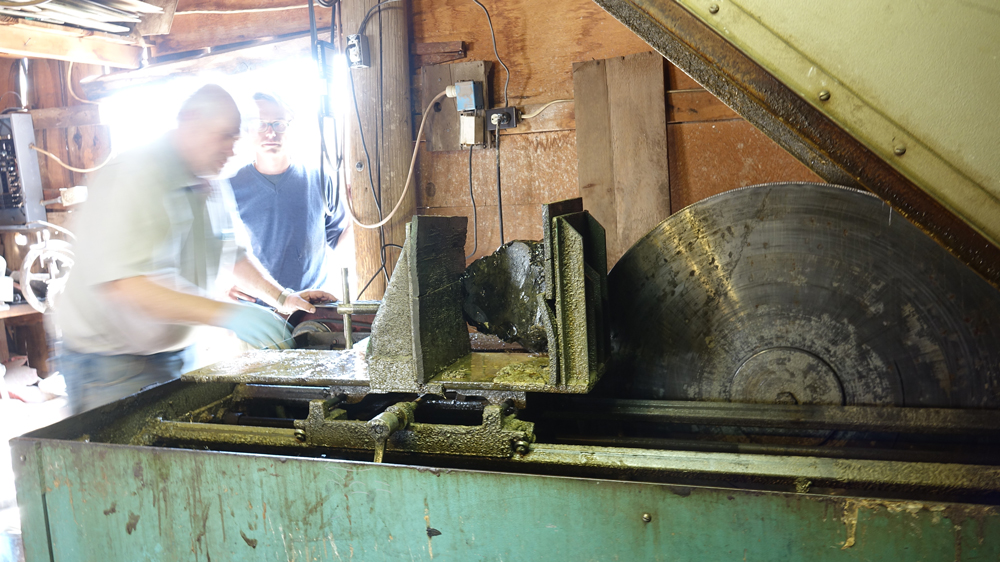
Slicing the raw obsidian
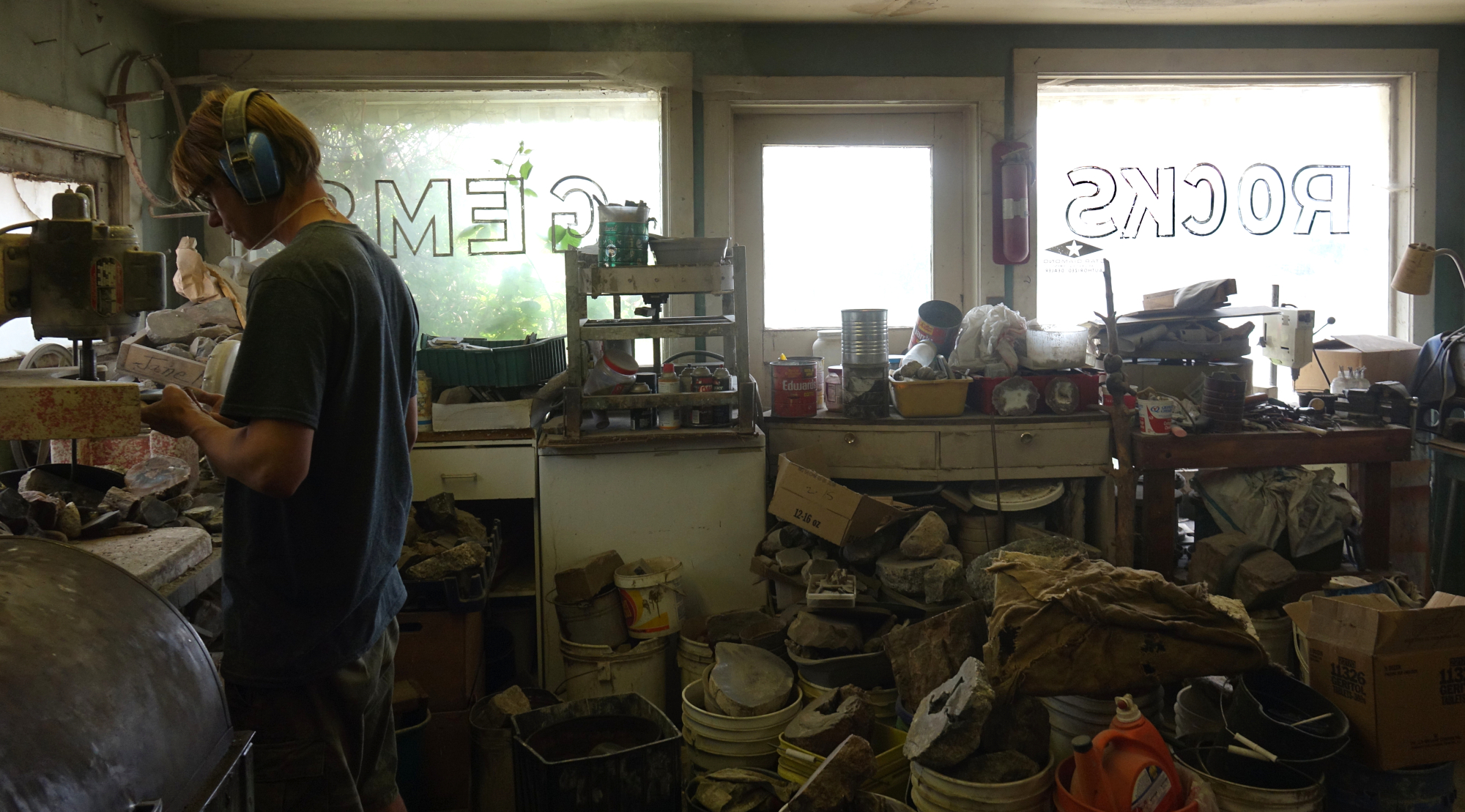
Silvan polishing the surface of a shew stone

The tablets were fabricated on location at Highland Rock & Gem Shop, Burns, OR
*unless otherwise noted, all photography by Emily C. Thomas